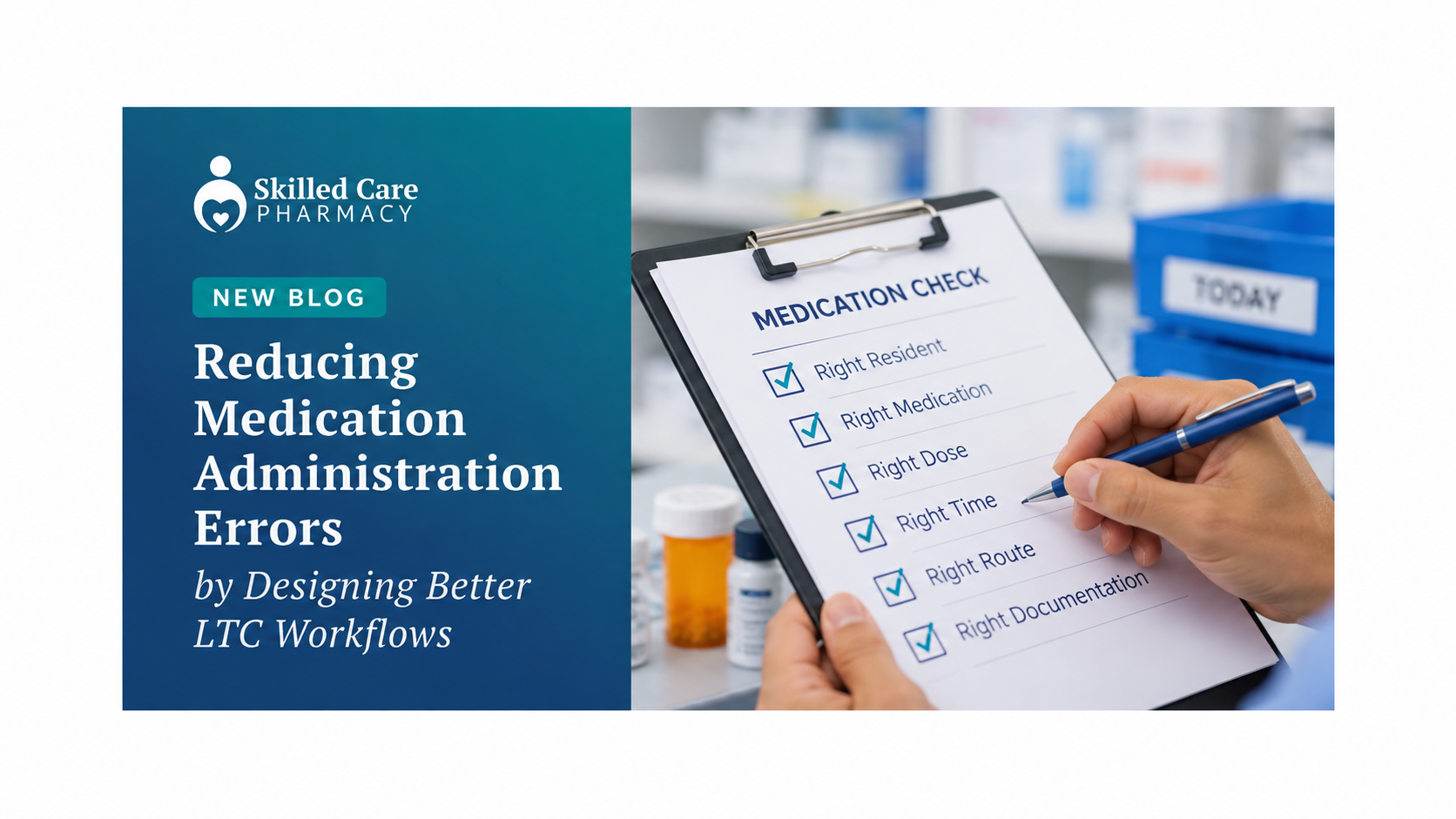
Learn how to safely store and manage medications during winter months in long-term care facilities to ensure potency and resident safety.

When temperatures drop, long-term care (LTC) facilities face unique challenges in maintaining safe and effective medication storage. Cold weather, fluctuating indoor temperatures, and dry air can all impact medication potency and patient safety. As a trusted pharmacy partner, Skilled Care Pharmacy helps facilities protect their residents and ensure that every dose remains as effective as intended.
1. Monitor Room Temperatures and Humidity
Most medications are formulated for storage at controlled room temperatures between 68°F and 77°F. During the winter, heating systems can cause temperature spikes or dry conditions that degrade medications.
Facilities should:
- Use digital thermometers in storage areas.
- Keep a daily temperature log for compliance.
- Maintain moderate humidity levels to prevent drying out capsules or tablets.
If a medication room regularly exceeds the recommended range, Skilled Care’s pharmacy team can advise on storage adjustments or alternative options.
2. Protect Temperature-Sensitive Medications
Some medications—such as insulin, vaccines, and certain antibiotics—require refrigeration. Door openings, power outages, or uneven cooling can compromise these items.
Best practices include:
- Avoid overfilling refrigerators to allow for air circulation.
- Place thermometers in both the front and back of the fridge for accuracy.
- Create an emergency plan for power loss, including backup coolers and contact information for pharmacy delivery.
Your pharmacy partner can help verify whether medications affected by temperature changes should be replaced or are still viable.
3. Address Static and Dry Air
Dry winter air can build static electricity, especially in medication packaging areas. Static can cause powdered drugs to cling or make handling small pills difficult.
Use humidifiers and antistatic mats in dispensing areas to reduce risk and improve accuracy.
4. Review Emergency Delivery Protocols
Winter storms and icy roads can delay deliveries. Facilities should review emergency medication procedures with their pharmacy provider to ensure continuity of care. Skilled Care Pharmacy maintains contingency routes and backup supply options for critical medications, minimizing disruption to patient care.
5. Educate Staff on Cold Weather Safety
It’s not just medications at risk—residents are, too. Encourage staff to monitor residents for signs of cold exposure, dehydration, or low blood pressure that may result from medication side effects combined with cold weather.
In Summary:
Winter is a time for warmth, safety, and vigilance. By partnering with Skilled Care Pharmacy, your facility can ensure medication integrity, maintain compliance, and provide residents with reliable care no matter the season.