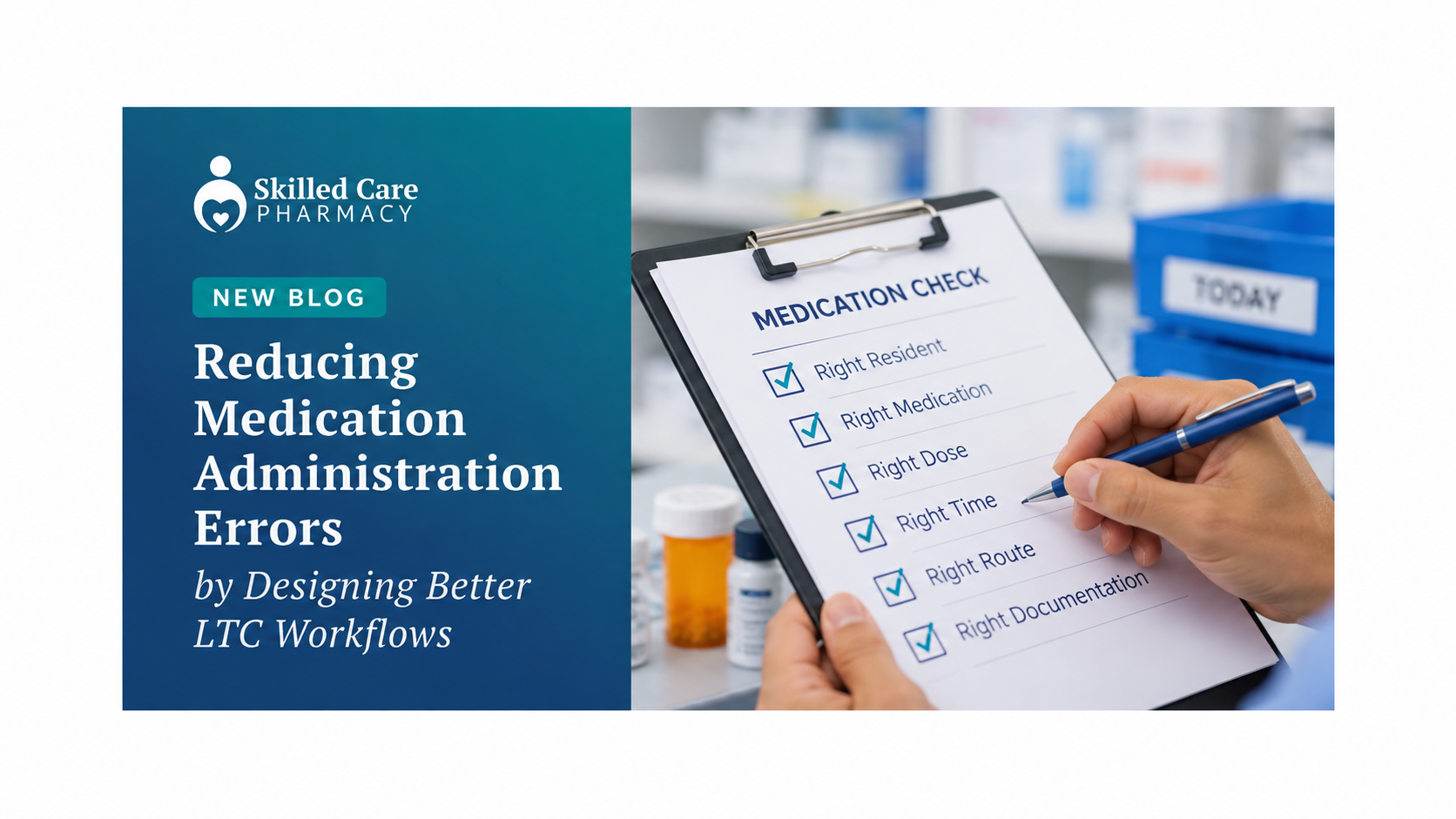
Discover how effective medication management can reduce costs, improve efficiency, and increase profitability in long-term care facilities.
Medication management in long-term care is often viewed strictly as a clinical responsibility, but its impact extends far beyond resident health. For facility leadership, medication management plays a direct role in operational efficiency, cost control, and overall financial performance.
When systems are inefficient or inconsistent, costs rise quickly. Medication errors, delays in delivery, and lack of coordination between pharmacy and facility teams can lead to waste, increased labor demands, and even hospital readmissions. Each of these outcomes carries both clinical and financial consequences.
Where Costs Increase
Facilities may experience increased costs due to:
• Duplicate or unnecessary medications
• Inefficient ordering processes
• Delayed medication delivery
• Time spent resolving discrepancies
• Increased staff workload related to medication issues
These inefficiencies often go unnoticed because they are spread across departments, but collectively they can significantly impact a facility’s bottom line.
The Role of Structured Medication Management
A structured medication management system creates consistency across all stages of the process. From order entry to administration, clear workflows reduce errors and streamline operations.
Accurate medication administration records ensure staff are always working from the most current information. This reduces time spent verifying orders and prevents avoidable mistakes.
Pharmacy Partnership as a Cost-Control Strategy
A strong pharmacy partner helps facilities operate more efficiently by:
• Ensuring timely and accurate medication delivery
• Providing pharmacist oversight to reduce unnecessary prescriptions
• Supporting documentation accuracy
• Helping streamline communication between care teams
These services reduce operational friction and allow staff to focus on resident care rather than administrative corrections.
Operational Efficiency and Staff Impact
Medication management directly affects staff workload. When systems are disorganized, nurses spend more time clarifying orders, correcting errors, and managing inconsistencies.
Efficient systems reduce these burdens, leading to improved staff satisfaction and better retention, both of which have long-term financial implications.
Measuring the Impact
Facilities that prioritize medication management often see:
• Reduced medication waste
• Lower administrative costs
• Fewer hospital readmissions
• Improved survey outcomes
These improvements contribute to stronger financial performance and a more stable operational environment.
Conclusion
Medication management is not just a clinical function, it is a strategic lever for improving profitability in long-term care. By implementing structured processes and partnering with a reliable pharmacy provider, facilities can reduce costs while improving both efficiency and resident outcomes.
Skilled Care Pharmacy supports long-term care facilities by providing the systems, expertise, and operational support needed to optimize medication management at every level.
Looking to improve efficiency and reduce unnecessary costs in your facility? Skilled Care Pharmacy partners with long-term care teams to streamline medication management and support stronger operational performance. Contact us to learn how we can support your team.