Learn how better LTC workflows can reduce medication administration errors, improve nursing efficiency, and strengthen medication safety for residents.
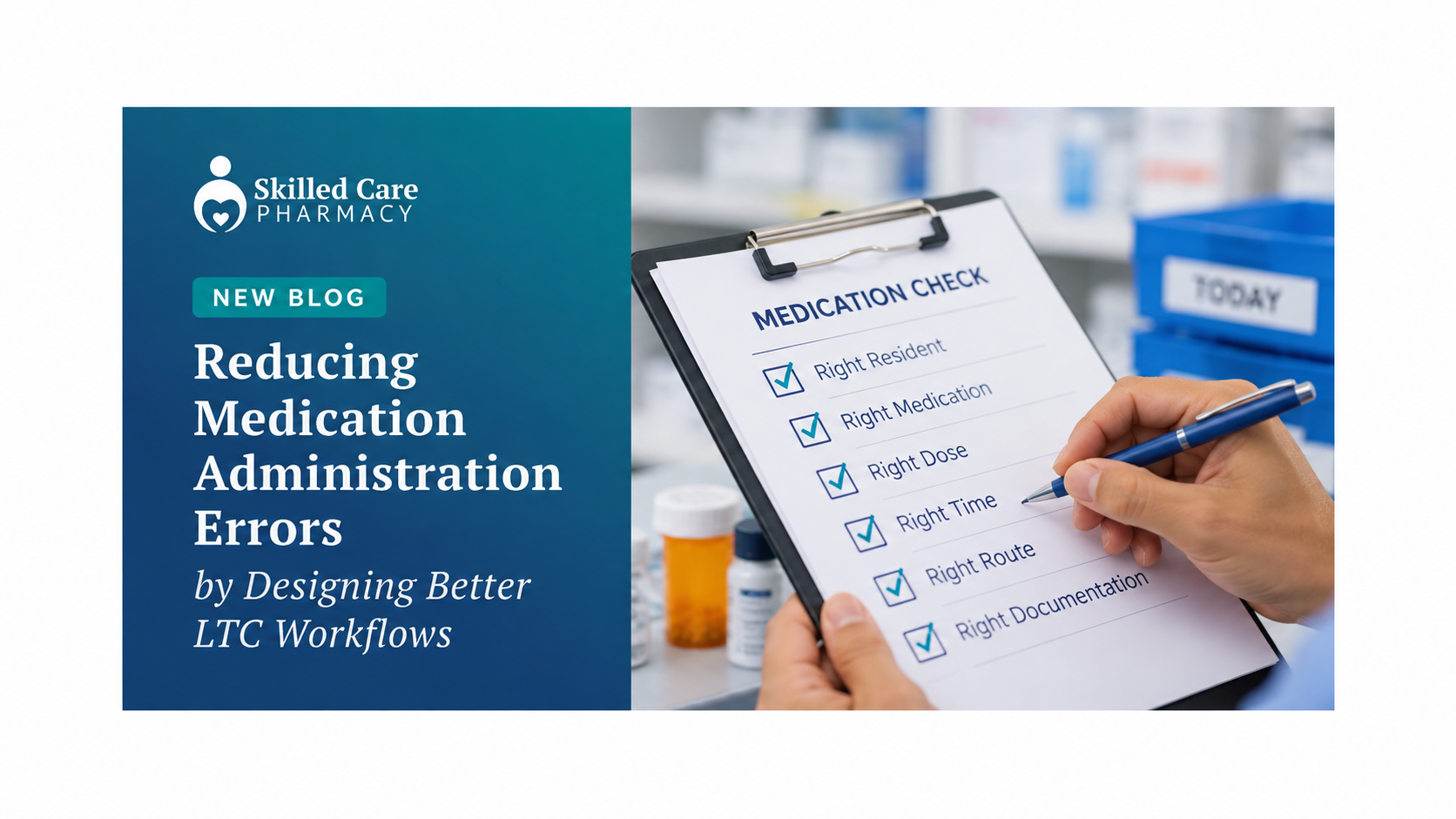
Medication administration is one of the most routine responsibilities in long-term care, but routine does not mean simple.
Every medication pass requires nursing staff to coordinate resident information, medication orders, administration schedules, documentation, pharmacy communication, clinical observations, and unexpected interruptions. When these processes work well together, they support safe and consistent medication administration. When workflows are unclear, inconsistent, or overly dependent on individual staff knowledge, the opportunity for errors and delays can increase.
That is why medication safety should not be viewed solely as an individual responsibility.
It is also a systems issue.
Facilities that want to reduce medication administration errors should examine not only what staff members are doing, but also the workflows surrounding them.
Medication Safety Begins Before the Medication Pass
Medication administration is often discussed in terms of what happens at the point of care. However, many of the factors affecting medication accuracy occur well before a nurse begins the medication pass.
Orders must be received and communicated correctly. Medication changes must be documented. New medications must reach the facility. Pharmacy questions must be resolved. Medication carts and supplies must be organized. Resident information must be current and accessible.
A breakdown at any point in that process can create challenges later.
For example, an unclear medication order may require clarification during an already busy shift. A late refill request may create uncertainty about an upcoming dose. A medication change that was not clearly communicated may require nursing staff to stop and investigate before administration.
The medication pass may be where the issue becomes visible, but the workflow leading up to it may be where the problem began.
Standardization Reduces Unnecessary Variation
One of the strongest tools facilities can use to support medication safety is standardization.
Staff members should not have to rely solely on experience or institutional memory to determine how common medication situations should be handled.
Facilities can create standardized processes for:
- Receiving and verifying medication orders
- Processing new admissions
- Handling hospital returns
- Requesting refills
- Communicating medication changes
- Responding to unavailable medications
- Contacting pharmacy or prescribers with questions
- Documenting medication-related communication
- Escalating urgent concerns
Clear procedures become particularly important when facilities experience staffing changes.
New hires, float nurses, agency staff, and temporary team members may not have the same familiarity with facility routines as long-term employees. A documented, consistent workflow provides everyone with the same starting point.
Reduce Interruptions During Medication Administration
Long-term care environments are busy, and interruptions cannot always be avoided.
However, unnecessary interruptions during medication administration can increase cognitive workload and make an already detailed process more difficult.
Facilities should consider examining what commonly interrupts medication passes.
Are nurses frequently answering non-urgent questions?
Are needed supplies missing?
Are medication-related issues being discovered during the pass that could have been addressed earlier?
Are staff members regularly searching for information?
Are communication expectations unclear?
Once recurring interruptions are identified, leadership teams can determine whether workflow changes could reduce them.
The solution may be as simple as preparing supplies earlier, establishing expectations around non-urgent interruptions, reorganizing information, or creating a better process for resolving medication questions before the medication pass begins.
Create Clear Communication Pathways
Medication management involves multiple people, including nursing staff, prescribers, pharmacy teams, residents, families, and other members of the care team.
When communication responsibilities are unclear, important information can be delayed or lost.
Facilities should establish clear expectations for questions such as:
Who contacts the pharmacy when clarification is needed?
Who follows up with the prescriber?
How are medication changes communicated between shifts?
Where is the communication documented?
What happens when an issue remains unresolved?
When does a concern require escalation?
These questions should have clear answers that staff can easily access.
A strong communication pathway reduces the amount of time staff spend determining what to do and allows them to focus on resolving the actual medication concern.
Design Workflows Around Transitions of Care
Transitions are particularly vulnerable points in medication management.
New admissions and residents returning from hospitals or other healthcare settings may arrive with medication lists, discharge instructions, new prescriptions, discontinued medications, and other changes that must be reconciled.
A standardized transition workflow can help ensure that critical steps are not missed.
That process may include obtaining an accurate medication history, comparing available records, verifying current orders, identifying discrepancies, communicating information to the pharmacy, confirming medication availability, and documenting changes for the care team.
Checklists can be especially useful during transitions because they reduce reliance on memory during complex processes.
Learn From Near Misses and Recurring Problems
Not every medication-related problem results in an error.
Sometimes staff identify and correct an issue before it reaches the resident. Those near misses can provide valuable information.
Instead of treating the event as resolved and moving on, facilities can ask:
What allowed this issue to occur?
What allowed staff to catch it?
Could the same problem happen again?
Is there a process change that could prevent it?
The same approach should be applied to recurring medication questions and operational challenges.
If staff repeatedly encounter the same issue, leadership should consider whether the problem reflects a larger workflow weakness.
Use Pharmacy as an Operational Partner
A long-term care pharmacy can provide another perspective on medication-related workflows.
Pharmacy teams may recognize recurring order issues, refill patterns, clarification requests, medication availability concerns, or communication challenges that are difficult for facility leaders to see from inside their own operations.
Regular communication between pharmacy and facility teams can help identify these patterns and determine whether additional education, workflow adjustments, or process improvements may be helpful.
This moves the pharmacy relationship beyond medication dispensing and toward collaborative medication management.
Better Systems Support Safer Medication Administration
Medication safety requires knowledgeable, attentive healthcare professionals, but even excellent staff members perform best when supported by strong systems.
Clear workflows reduce uncertainty.
Standardized procedures reduce unnecessary variation.
Better communication reduces delays.
Thoughtful medication-pass practices reduce avoidable distractions.
Strong transition processes reduce the likelihood that important information will be missed.
And reviewing recurring issues allows facilities to continuously improve.
Long-term care facilities cannot eliminate every medication-related challenge, but they can create environments that make the safest action easier and more consistent for the people providing care.
At Skilled Care Pharmacy, we work alongside long-term care teams to support medication management processes, communication, and pharmacy services that help facilities provide safe, consistent care to their residents.
Better medication safety starts with better systems. Contact Skilled Care Pharmacy to learn how we help long-term care facilities strengthen medication management workflows, improve communication, and support safer, more consistent resident care.