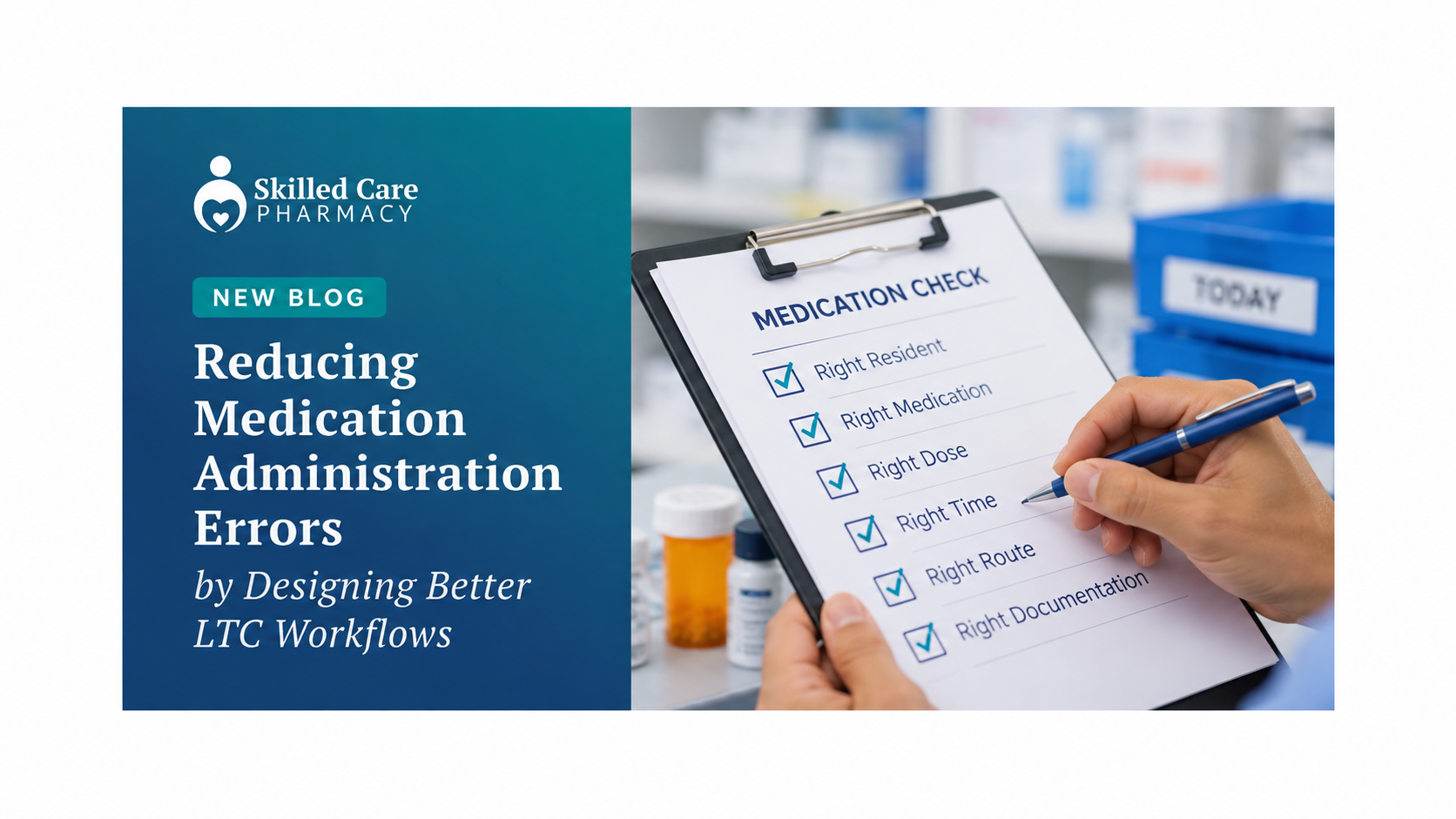
Learn the most common medication errors in long-term care and how facilities can prevent them through better systems and pharmacy support.
Medication errors remain one of the most significant risks in long-term care settings. With residents often managing multiple prescriptions, complex conditions, and frequent care transitions, the potential for mistakes increases without strong systems in place.
Understanding where errors occur and how to prevent them is essential for protecting residents and maintaining compliance.
Most Common Medication Errors
Medication errors typically fall into several categories:
Incorrect Dosage
Administering too much or too little of a medication due to outdated records or miscommunication.
Missed Doses
Often caused by incomplete documentation or breakdowns during shift changes.
Duplicate Medications
Residents receiving multiple prescriptions for the same condition without proper review.
Timing Errors
Medications given at incorrect times, which can reduce effectiveness or increase risk.
Why These Errors Occur
Errors are rarely caused by a single issue. They often result from a combination of:
• Communication gaps between staff
• Inconsistent documentation
• High workload and staffing challenges
• Lack of real-time medication updates
Without structured processes, these risks compound quickly.
Prevention Strategies
Preventing medication errors requires a system-wide approach.
Standardized Documentation
Accurate, up-to-date medication records reduce confusion and ensure consistency across shifts.
Clear Communication Protocols
Structured handoffs between caregivers minimize missed information during transitions.
Pharmacist Oversight
Regular medication reviews identify potential risks, interactions, and unnecessary duplication.
Staff Education
Ongoing training ensures caregivers understand medication requirements and warning signs.
The Role of Technology
Integrated pharmacy systems provide real-time updates, reducing reliance on manual processes. These systems improve accuracy and help facilities stay organized during audits and inspections.
Impact on Facilities
Reducing medication errors leads to:
• Improved resident safety
• Fewer adverse drug events
• Stronger compliance performance
• Increased staff confidence
Conclusion
Medication errors are preventable when facilities implement structured processes and strong partnerships. By prioritizing accuracy, communication, and oversight, long-term care providers can create safer environments for residents.
Skilled Care Pharmacy works with facilities to reduce medication errors through reliable systems, clinical expertise, and consistent support.
Preventing medication errors requires strong systems, clear communication, and reliable pharmacy support. Skilled Care Pharmacy works alongside long-term care facilities to strengthen medication safety and reduce risk. Contact us to learn more.