Learn why medication reconciliation should extend beyond hospital discharge to improve resident safety, reduce medication errors, and strengthen long-term care operations.
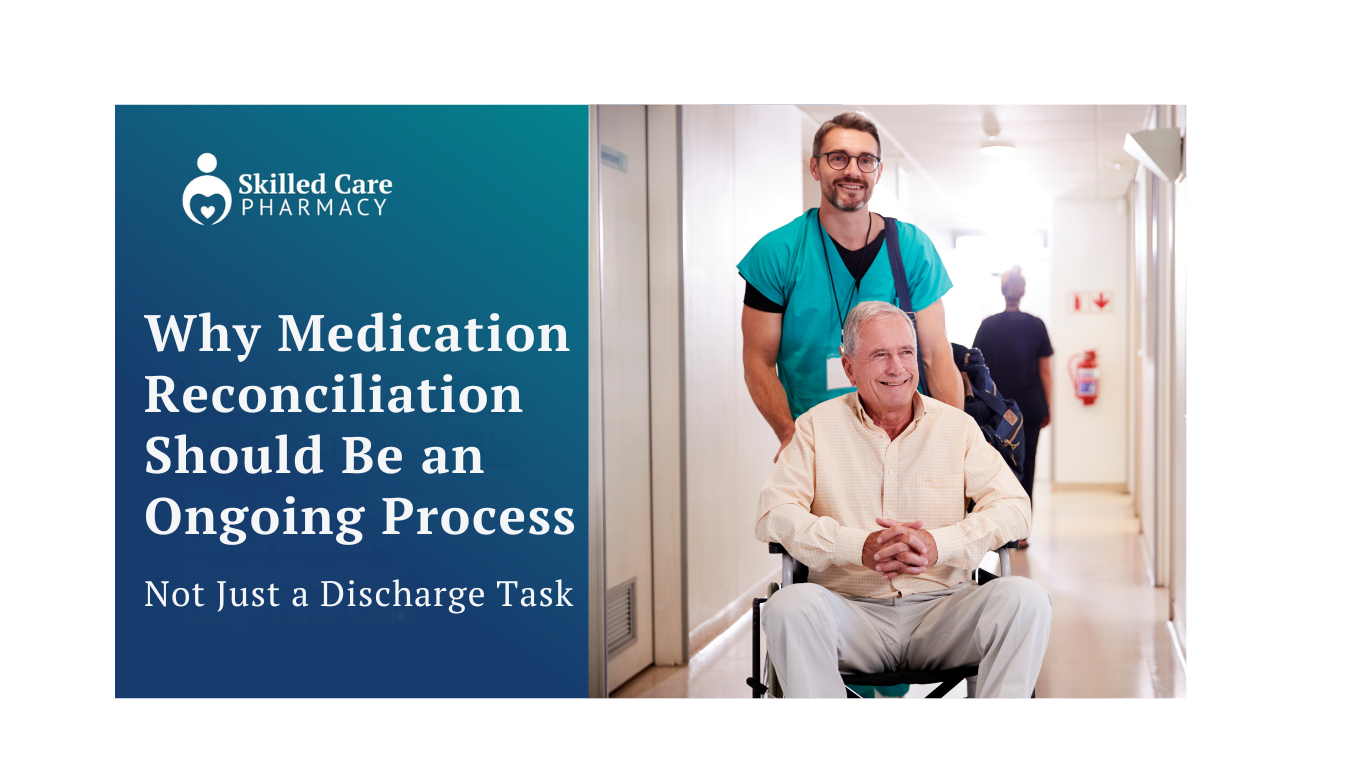
Medication reconciliation is often associated with one specific moment in a resident's healthcare journey: hospital discharge. While discharge is certainly a critical transition point, limiting medication reconciliation to this event overlooks numerous opportunities to improve resident safety throughout the continuum of care.
In long-term care, medication regimens evolve frequently. New diagnoses, specialist recommendations, medication shortages, formulary changes, and changes in a resident's condition all create situations where medication records must be reviewed and verified. Facilities that treat medication reconciliation as an ongoing operational process rather than a one-time task are better positioned to reduce medication errors, improve clinical outcomes, and maintain regulatory compliance.
Understanding Medication Reconciliation
Medication reconciliation is the process of comparing a resident's current medication regimen against new medication orders to identify discrepancies before they affect patient care. The objective is simple: ensure every resident receives the correct medication, at the correct dosage, at the correct time, for the correct reason.
Discrepancies may include:
- Omitted medications
- Duplicate therapies
- Incorrect dosages
- Drug interactions
- Outdated physician orders
- Changes made during outside appointments that were never communicated back to the facility
Although these discrepancies often occur during hospital admissions and discharges, they can happen any time a resident's care changes.
Why Ongoing Reconciliation Matters
Residents in long-term care typically have multiple chronic conditions requiring medications prescribed by several healthcare providers. As treatment plans evolve, the potential for inconsistencies grows.
Without ongoing medication reconciliation, facilities may experience:
- Increased medication errors
- Higher risk of adverse drug events
- Delayed treatment adjustments
- Increased hospital readmissions
- Survey deficiencies related to medication management
Treating reconciliation as a continuous process allows facilities to identify issues before they affect resident outcomes.
Critical Times to Perform Medication Reconciliation
Medication reconciliation should occur whenever there is a meaningful change in care, including:
- Hospital admissions and discharges
- Emergency department visits
- Specialist appointments
- New physician orders
- Medication discontinuations
- Significant changes in resident condition
- Annual care plan reviews
Building reconciliation into these routine workflows creates a safer and more consistent medication management process.
The Role of Technology
Technology has transformed medication reconciliation by improving communication between healthcare providers and reducing manual documentation errors.
Integrated pharmacy systems can:
- Update medication records in real time
- Alert staff to potential interactions
- Flag duplicate therapies
- Improve documentation accuracy
- Support interdisciplinary communication
When technology is combined with pharmacist oversight, facilities gain another layer of protection against preventable medication errors.
Pharmacy as a Clinical Partner
Medication reconciliation should not fall solely on nursing staff. Pharmacists provide valuable clinical expertise by reviewing medication profiles, identifying discrepancies, and recommending appropriate interventions.
An engaged pharmacy partner helps ensure:
- Medication profiles remain current
- Therapy changes are accurately documented
- Potential interactions are identified early
- Care teams receive timely clinical support
This collaborative approach improves communication while reducing administrative burden on facility staff.
Measuring Success
Facilities that incorporate ongoing medication reconciliation often experience:
- Fewer medication discrepancies
- Reduced hospital readmissions
- Improved resident safety
- Stronger survey performance
- Increased confidence among caregivers
Most importantly, residents receive safer, more coordinated care.
Conclusion
Medication reconciliation should never be viewed as a task reserved only for hospital discharge. It is an ongoing process that supports every stage of a resident's care journey.
By integrating reconciliation into daily operations and partnering with an experienced long-term care pharmacy, facilities can improve medication accuracy, strengthen communication, and create safer outcomes for every resident.
Want to strengthen your medication reconciliation process and improve resident safety? Contact Skilled Care Pharmacy today to learn how our pharmacy team supports long-term care facilities through accurate medication management, clinical oversight, and collaborative care.